

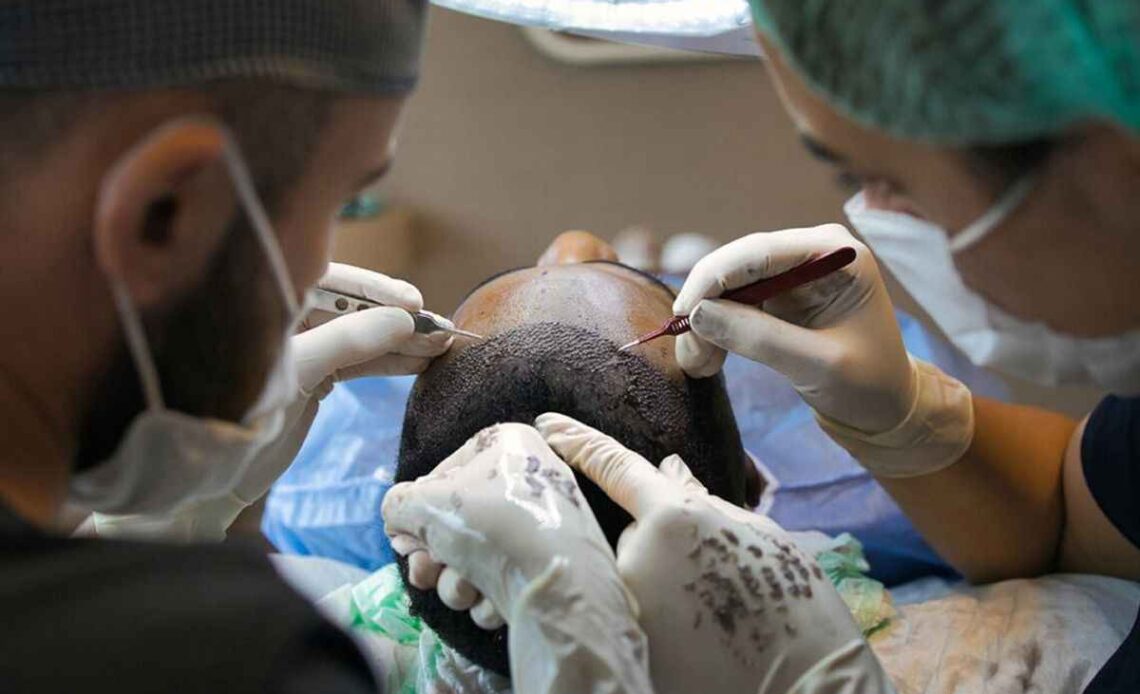
If you’re considering a hair transplant, there are some considerations you should make in advance. You need to know what to look out for when meeting with your surgeon, what questions to ask and how to understand whether there are red flags before you choose to go through surgery with them.
Hair transplants require advanced expertise and a deep understanding of the anatomy of the scalp and head due to the delicate nature of hair follicles. Even the smallest failure in the surgical method can result in detrimental results to those undergoing the procedure.
We’ve put together this guide on what could be considered a red flag before surgery and the signs you may need to seek medical advice during your recovery.
Contents
Prior to surgery
Unrealistic promises
If a surgeon claims that they’ll be able to achieve your dream hairline through surgery, you might want to think twice about moving forward with them. Hair transplants aren’t some miracle fix and won’t guarantee you get a full, thick head of hair.
Reputable providers should be honest about what they can achieve through your surgery, explaining realistic expectations, potential risks, as well as assessing your suitability for the surgery. If something sounds too good to be true, it likely is.
Surgeons lacking in experience and accreditation
Your potential surgeon should have plenty of experience in hair transplant surgery and should be registered with the General Medical Council – an awarding body in the UK that regulates surgical practitioners.
The risks of unregistered surgeons are that they aren’t trained in the intricacies of hair transplant surgery, which requires in-depth knowledge and experience due to its precise nature.
Don’t hesitate to ask a surgeon for their qualifications and about their past surgeries. Ideally, they should have photos of previous surgeries available for your perusal.
Low prices
While a low price tag may be tempting, it will usually be too good to be true. Surgery is a big investment; you’re paying for the expertise of your surgeon, who will have gone through extensive training to achieve in-depth knowledge. A smaller price could signify a lack of quality in surgical expertise, tools and methods.
Pushy tactics
If your consultation feels more like a sales pitch than a no-obligation opportunity to ask your surgeon questions about the surgery, be wary.
Surgeons should not make you feel obliged to do anything until you’re ready and should understand that not everyone who consults them will go on to become patients.
Following surgery
Signs of infection
After surgery, your surgeon should tell you about aftercare and the signs that something may have gone wrong, such as infection. They should also monitor you for such complications and treat you appropriately. A failure to do so could be considered negligence.
If you experience any of the following signs of infection, seek immediate medical attention and notify your surgeon:
- Localised redness
- Warmth at the surgical site
- Pus or discharge
- Fever-like increase in body temperature
Irregular growth
During the first few weeks, you will experience shedding, which is entirely normal. After the six-week mark, this should begin to stop, and your results should start to come in.
Your surgeon should explain what your regrowth will look like throughout recovery.
If you experience any of the following after the initial six-week period, notify your surgeon, as this is not considered normal:
- Hair growing in the wrong directions
- Patchy regrowth
- Multiple hairs are placed into single follicles around the hairline (creates a doll-like appearance)
- Necrosis or unexpected scarring in the recipient area
Your surgeon’s duty of care
Your surgeon is legally obliged to your well-being and the surgical outcome at every stage of the surgery. This includes before, during and after surgery.
These duties include:
- Getting your informed consent and making sure you understand all aspects of the surgery, including risks and alternatives;
- Making sure you have realistic expectations of what the surgery can achieve;
- Assessing your suitability for the surgery as there are some ideals you should meet, including the density of follicles at the back of your head;
- Performing the surgery correctly and according to how they discussed they would do so during your consultation;
- Providing full post-surgery monitoring and educating you on the aftercare to optimise your healing.
If they fail to adhere to these standards and you suffer complications, you may be entitled to make compensation claims for hair transplants gone wrong.
Compensation can help you recover the financial loss you may have incurred from negligent surgery and reimburse you for not only the physical harm, but also the psychological.
FAQs about claiming compensation
How long do you have to claim?
Three years from the date of surgery or the “date of reasonable knowledge” – the date you could have reasonably understood your issues were due to your surgeon’s negligence.
What does compensation cover?
Compensation claims cover the costs of additional treatment and additional expenses such as travel to and from appointments, counselling and loss of earnings if your surgery impacted your job.
If you’re considering a hair transplant, be sure to look out for these red flags when consulting with your surgeon. If you’ve been through a hair transplant surgery, consider the above signs that you may need to pursue further action. And if you have experienced negligent treatment, consider the possibility of making a compensation claim you may be owed.