

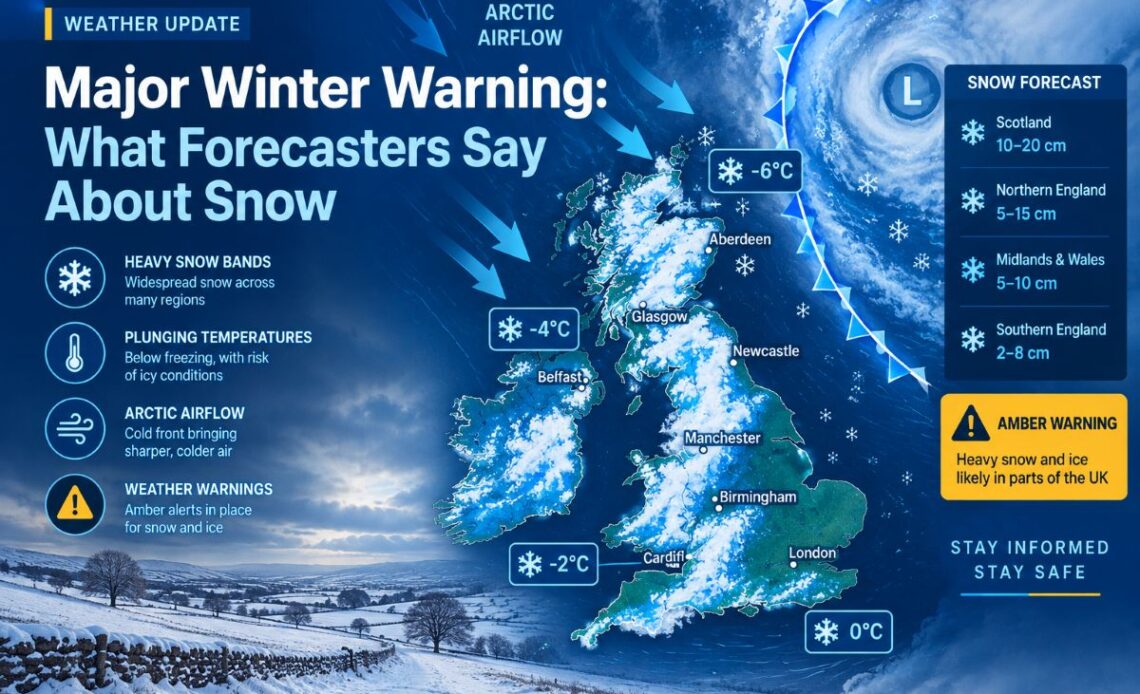
Talk of a new “Beast from the East” has started circulating as Britain heads deeper into autumn, raising the prospect of another disruptive spell of snow, ice and freezing temperatures. But the latest forecasts do not point to a repeat of the major 2018 event being imminent.
The Met Office says the UK is entering a more typically autumnal period, with rain, showers, stronger winds and cooler temperatures. Further ahead, there is some potential for colder interludes, but the current outlook is not a forecast for widespread snow or a prolonged freeze.
What’s actually true about the Beast from the East?
“Beast from the East” is not the name of a particular storm. It describes a weather pattern in which very cold air moves towards Britain from continental Europe, generally as a result of easterly winds and high pressure to the north or northeast.
The best-known example came in late February and early March 2018, when severe cold and heavy snow caused widespread disruption to roads, railways, schools and flights.
That distinction matters because an easterly wind or a chilly day does not automatically mean a Beast from the East is developing.
For a genuinely severe episode, several atmospheric ingredients need to line up. These can include blocking high pressure, a suitable jet-stream pattern and sufficiently cold air reaching Britain.
So, could another one happen this winter?
It is possible, but there is no reliable basis at present for saying that Britain is about to experience another 2018-style event.
The Met Office’s latest long-range forecast points towards changeable conditions through October, with Atlantic low-pressure systems bringing periods of rain and strong winds. Temperatures are expected to be near or slightly above average overall, although brief colder spells remain possible.
There is also an important wider factor this year: El Niño.
The Met Office says the developing 2026 El Niño is expected to increase the likelihood of wetter and stormier conditions across north-west Europe during autumn and early winter. Later in winter, El Niño can also influence the stratospheric polar vortex, potentially increasing the chance of sudden stratospheric warming.
But that is a probability shift, not a prediction of snow.
Why are people talking about a polar vortex?
This is where some weather headlines can become misleading.
A sudden stratospheric warming can disrupt the polar vortex and, in some circumstances, alter the jet stream. The Met Office says such events have been associated with major cold spells, including the 2018 Beast from the East.
However, sudden stratospheric warming does not happen every year, and even when it occurs it does not guarantee severe cold in Britain.
The Met Office has specifically warned that recent headlines linking El Niño and the polar vortex to an imminent nationwide snow event overstate what the forecasts currently show.
Common misconceptions about a new Beast from the East
A cold forecast means snow is coming.
Not necessarily. Cold air can bring clear skies, frost or icy conditions without widespread snowfall.
El Niño means Britain will have a freezing winter.
No. Its effects on UK weather are complicated and seasonal, and individual weather events cannot be predicted from El Niño alone.
A weather map showing temperatures below zero means a UK-wide freeze.
Weather maps often show particular locations or model scenarios. They should not be interpreted as a national forecast without context.
Climate change means another Beast from the East is impossible.
Cold spells can still occur. The Met Office says UK winters are warming overall, but natural variability means severe cold remains possible.
What should households do now?
There is no need to panic-buy fuel, food or heating supplies because of speculation about a Beast from the East.
A sensible approach is to monitor the Met Office forecast and official weather warnings as winter approaches. If colder weather becomes more likely, check your heating system, make sure you have suitable clothing and footwear, and consider how vulnerable family members, neighbours or pets could be affected by prolonged cold.
Drivers should pay particular attention to official warnings before travelling during periods of snow or ice, rather than relying on social-media weather maps.
The bottom line
Britain could experience a significant cold spell later this winter, but the latest evidence does not show that another Beast from the East is about to hit.
For now, forecasters are describing a changeable autumn, with wetter and windier conditions more prominent than widespread snow and freezing temperatures. The more useful signal to watch is how atmospheric patterns develop later in the season — not dramatic individual weather maps shared online.