

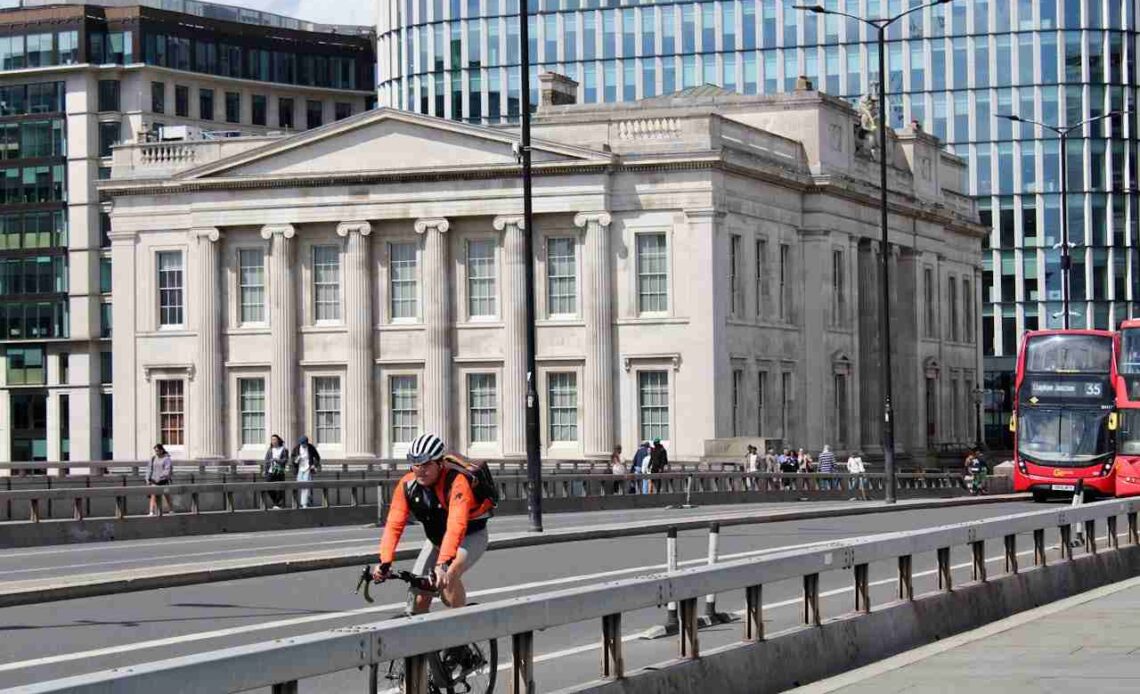
Many have travelled down London’s legendary streets, likely not realising the journey through time these streets have experienced.
While most of them are now modern, some remain visible in their original materials, from cobblestones to asphalt and beyond.
When their evolution began in the mid-1600s, you wouldn’t have believed where they would end up today.
Contents
The 1600s and 1700s — London’s First Streets
In 1660, the monarchy returned to England after seven years under Oliver Cromwell’s rule as Lord Protector. Under him, London had no streets to speak of, with the Thames River being the city’s economic mainstay.
After Cromwell died in 1658, it took under two years for Charles II to claim the throne, starting the Restoration period. Plans were afoot to build a “new” London infrastructure using the abundance of clay, gravel and cobbles lining the Thames foreshore.
The Great Fire of London in 1666 ended these plans temporarily. The four-day blaze destroyed thousands of the city’s buildings and left some 100,000 people homeless.
In many ways, the fire prompted action from Charles II and the London community, with brick houses replacing charred remains and new cobblestone alleyways with cambered gutters appearing, albeit in the same disorganised fashion as before the blaze.
King Charles II ordered the erection of his father’s equestrian statue outside the Mews, close to Charing Cross. Roadworkers constructed squares with cobbled roads, smoothed stone pavements and granite kerbs for easier coach accessibility.
However, beyond these, constructed streets remained virtually non-existent. When Charles II died in 1685, his grand plans died with him, though some of these early buildings can still be seen in London.
Progression Through Palmer and Beyond
With Charles’ brother James II on the throne, the first of many Turnpike Acts was passed. The streets leading into London improved due to travellers paying tolls for their upkeep.
The city’s streets remained almost impassable until a Mr. John Palmer from Bath took over the Royal Mail in the early 1780s.
Palmer and his successor ran a mail coach journey trial, which motivated improved streets and helped him attain professional surveyor status.
They initiated the regular inspections of mail routes and carried out street maintenance where required.
When the Napoleonic Wars started, London’s main streets — including those through Highgate Hill and Piccadilly, where Piccadilly Circus attracts tourists and shoppers —- were pristinely cobbled and properly looked after.
In the East End, teams laid less slippery granite for horses, but officials banned iron-bound wheels on these surfaces. While the major routes were near immaculate, transporting heavy loads from the docks through turnpike roads and stoned streets worked until reaching the bumpy, unmaintained side streets.
McAdam’s Innovation Prompts Improvements
A certain J.L. McAdam accepted the post of surveyor in Bristol, alluding to him taking charge of street repairs in Bristol during the wars.
His road repaving method was imaginative and cheaper, using carefully graded small stones bound where necessary with cement or clay. By the end of the wars in 1815, McAdam had brought his ideas to the streets that connected other centres to London.
Soon afterwards, the ideas — known as macadam — reached the city, with the Regent’s Canal opening and the docks extended.
With the advent of steam power in the mid-1820s, splitting granite became easier, and the material saw more use in road laying. Granite paving appeared on the latest docks and the Highgate and Haverstock Hill areas.
A manufacturer unsuccessfully attempted mastic paving in Vuaxhall. The next street advancements happened in the late 1830s, when a Mr. Claridge supplied and laid short asphalt cement stretches in Kensington, Whitehall and Bunhill Row for the first time.
The Emergence of Asphalt and Tarmac
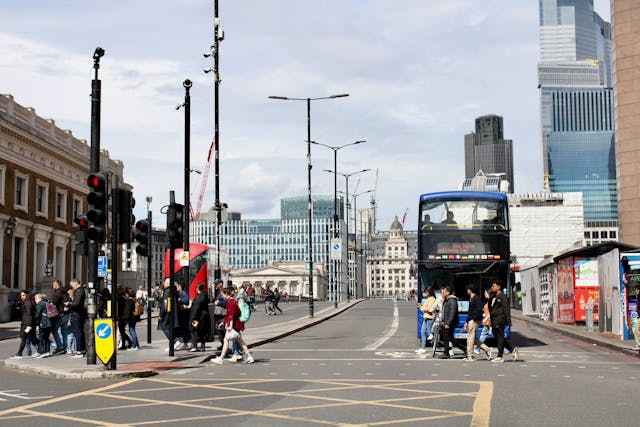
It took until 1869 before compressed asphalt made its mark on London streets, with a combination of macadam, granite paving and wooden blocks used in the interim.
Even after London championed compressed asphalt, it would only dominate the capital as a street surface after automobiles became popular in the 1900s, often laid over existing granite.
Around 1902, Edgar Purnell Hooley patented Tar Macadam, which mixed tar with macadam, broken slag or associated materials. By 1914, it was in high demand.
After World War I ended, popularity increased, with 190 miles of arterial roads completed, including England’s first dual carriageway.
Tarred macadam roads existed at London’s Paddington and St. John’s Wood streets, although roads and bridges in the West End and around the city still consisted of plain macadam.
Mayfair streets were still tarred wood blocks, which ceased manufacture in the 1950s. You can still find these original blocks behind the London Eye in Belvedere Road.
Asphalt is a mix of aggregates and binding material, while tarmac consists of aggregates and tar. They differ in strength, durability and finish, and both have benefits depending on paving surface requirements.
Asphalt is the most common on London streets, due to its durability and low maintenance, making it ideal for paving. Its low-carbon nature and the asphalt industry’s incorporation of more sustainable alternatives will likely encourage further use down the line.
Motivating Further Evolution in Street Building
While changes in London’s street surfaces have slowed since World War II, the industry’s need to become more sustainable has prompted an adjustment in existing road surfacing materials.
Planners regularly use more reclaimed and recycled product derivatives for new and refurbished London streets. Looking back at their early cobbled beginnings, it’s hard to predict how technology will evolve these historic roadways in the future.